Neck pain is a common occurrence with cyclists, especially triathletes who mold their bodies to fit the time trial position that is in no way natural for the human body. The head position is in front of the shoulders, and gravitational force increases muscular activity and stress. The requirements of the cervical extensor muscles (the muscles on the back of the neck and shoulders) are great, and the longer the distance, the greater endurance required from them to keep the head up. Add in two other sports (swimming and running) that are also extension-biased, and you’re basically living in cervical extension 24/7 (or however many hours you train).

The problem with overuse of these muscles is that the antagonists are under utilized. These antagonists are critical stabilizing muscles for the cervical spine. Enter.. the Deep Neck Flexors, which consist of the longs colli, longus capitus, recus capitus, and longs crevicus. The muscles are on the FRONT side of the cervical spine (they are very deep behind the throat). Studies have shown that 70% of people with chronic neck pain have weak or underutilized deep neck flexors.
There are plenty of ways to work on postural control to hold the TT position (and plenty of muscles to target). The chin tuck, or cervical retraction, is a classic one to begin neuromuscular retraining of the deep neck flexors. This exercise can be deceivingly challenging. To begin, laying on the ground on your back, you want to first tuck your chin into the back of your neck (you WANT a double chin for this). Holding this retracted position, you lift your head off the ground slightly but DO NOT lose the chin tuck, even in the slightest!
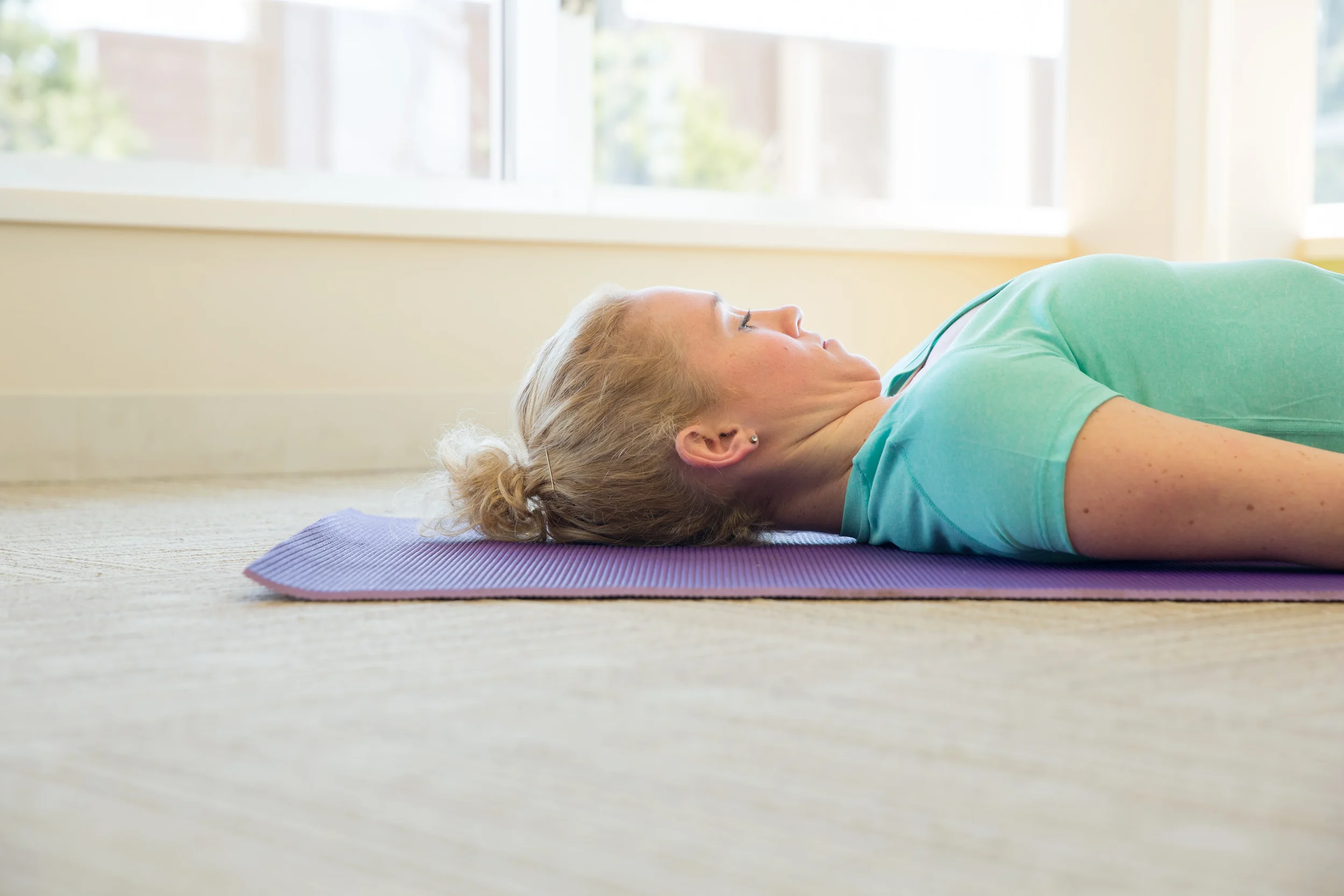
Credit: Summit Orthopedics
Doing this exercise flat on the ground is the most challenging against gravity. To decrease difficulty, you can lie in a 45 degree reclined position, or simply do the chin tuck on hands and knees. Neuromuscular exercises like these should be done frequently to see the benefits!